Mixer Ankarsrum: Complete Guide to the Ankarsrum Assistent Original
Key Takeaways
- The Ankarsrum Assistent Original is a Swedish stand mixer made since 1940, famous for bread dough and ranked #1 by America’s Test Kitchen in 2023, 2024, and 2025.
- Unlike KitchenAid and other planetary mixers, it uses a rotating bowl with a stationary dough roller or dough hook, creating a learning curve but exceptional results for large, heavy doughs up to around 5 kg (11 lb).
- Wet ingredients should go in first, and many bakers reduce hydration by 5–10% compared to hand kneading because the machine develops gluten so efficiently.
- Built with a powerful motor (600W), metal gearing, and overload protection, plus made in Sweden with a manufacturing tradition spanning over 80 years.
- The price is high (around $700–$900 USD), but it’s most worthwhile for frequent bakers who value power, capacity, and versatility.
What Is the Ankarsrum Mixer?
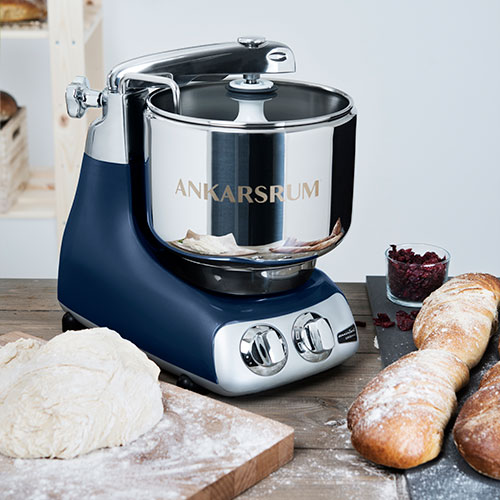
When people search for “mixer Ankarsrum,” they’re typically looking for the Ankarsrum Assistent Original—a premium Swedish machine that’s earned cult status among home bakers. This isn’t your average appliance. It’s a workhorse designed to handle everything from delicate meringue to massive batches of bagel dough.
Production began in 1940 in the small town of Ankarsrum, Sweden, originally under the Electrolux brand. Over the decades, it’s been refined and improved, but the core rotating-bowl concept has remained untouched. The current model, the Ankarsrum Assistent Original (AKM 6230), retails for around $700–$900 USD depending on color and bundle.
Physically, the Ankarsrum stands apart from other mixers. It features:
- A low, stable base housing the motor
- A large 7L stainless steel bowl that rotates
- A separate 3.5L plastic bowl for whipping tasks
- A distinctive side-mounted arm holding either a roller or hook
This article covers how it works, how it stacks up against competitors like KitchenAid, and how to get fantastic results—especially when making bread.
Design, Build Quality, and Colors
The Ankarsrum is a machine that screams Scandinavian industrial design. Heavy-duty, built to last, and assembled by hand in Sweden—every unit carries that heritage.
Construction Details
| Component | Material/Specification |
|---|---|
| Base | Cast metal with enamel finish |
| Transmission | Metal gearing, belt-driven |
| Motor | 600W, housed in the base |
| Main Bowl | 7L (7.4 qt) stainless steel bowl |
| Whisk Bowl | 3.5L Tritan plastic bowl with lid |
| Weight | Approximately 32 lb (14.5 kg) |
| Dimensions | 19” L × 14.25” W × 14.25” H |
Every Ankarsrum is individually tested at the factory for function, noise, and safety before shipping. This quality control tradition dates back to mid-20th century production methods.
Available Colors
The color range is fantastic, designed to suit both modern and classic kitchens:
- Ocean blue
- Coral crush
- Mineral white
- Creme
- Black chrome
- Red
- Orange
That 32 lb weight isn’t just impressive on paper—it means the machine won’t “walk” across your counter during intense kneading sessions. Despite its heft, the compact height allows storage under most kitchen cabinets.
How the Ankarsrum Mixing System Works
Here’s where the Ankarsrum flips conventional wisdom on its head. While most mixers spin the attachment and keep the bowl stationary, the Ankarsrum does the opposite: the motor turns the bowl from below while the dough roller or hook stays mostly fixed in place.
The Rotating Bowl Mechanism
The wide bowl spins on the base, driven by a belt system that delivers consistent torque. As the bowl rotates, dough moves against the stationary roller, which is pressed against the bowl wall. The action mimics hand kneading—the fluted roller works like fingers stretching the dough, while the scraper acts like the heel of your hand, folding everything back.
The Adjustable Arm
The arm holding the roller or hook isn’t locked in place. You control:
- Distance from bowl center – closer means more pressure
- Tension/pressure – adjusted via a knob
- Position height – to account for dough volume
Small adjustments make a real difference in gluten development and dough temperature. Start with lighter pressure and gradually tighten as the dough develops.
Roller vs. Hook
| Tool | Best For |
|---|---|
| Dough roller | High-hydration breads, soft doughs, sourdough, focaccia |
| Dough hook | Stiffer doughs like bagels, pretzels, low-hydration breads |
The Scraper
Don’t overlook this piece. The scraper continuously pulls dough and dry ingredients back toward the center of the bowl, preventing flour pockets and ensuring even mixing. It’s essential for the kneading process.
Controls
- Variable speed dial – approximately 40–180 RPM
- 12-minute timer – set it and walk away
- Automatic torque adjustment – the machine increases power under load
Performance: Bread, Doughs, and Everyday Baking
The Ankarsrum is particularly famous for bread dough, but it handles whipping and creaming tasks with equal confidence.
Capacity That Matters
The 7L steel bowl can process:
- Up to 5 kg (11 lb) of bread dough
- Approximately 6.6 lb of flour per batch
- Enough for about six 8” sandwich loaves
Real-world examples:
- Four large sourdough loaves in one batch
- Eight pizza bases
- A dozen bagels with room to spare
Performance Across Tasks
| Task | Performance |
|---|---|
| Lean bread dough | Exceptional—develops gluten gently without overheating |
| Enriched doughs (brioche, challah) | Handles butter and eggs effortlessly |
| Pizza dough | Perfect windowpane every time |
| Bagels/pretzels | Powerful motor barely warms up with stiff doughs |
| Whipped cream | Stiff peaks in under a minute |
| Meringue | Whips 1–18 egg whites equally well |
| Cookie dough | Cookie beaters make quick work of creaming |
| Cake batters | Plastic bowl with whisks works perfectly |
The Hydration Adjustment
Many bakers reduce water by 5–10% compared to hand-kneaded bread recipes. The Ankarsrum develops gluten so efficiently that doughs can end up wetter than expected. Start conservative and adjust.
The wide bowl makes it easy to add ingredients mid-mix and monitor texture—something that’s harder with taller, narrower planetary mixer bowls.
How to Use the Ankarsrum for Bread and Dough
Technique matters more with the Ankarsrum stand mixer than with many other mixers. New owners should expect a brief learning curve—typically a few batches before everything clicks.
Typical Workflow for Lean Bread
- Add liquids first – water, milk, or other wet ingredients go in the bowl
- Add flour and salt – pour on top of the liquids
- Start slow – begin at low to medium-low speed
- Let ingredients combine – wait until the dough forms before adjusting
- Increase roller pressure – move the arm gradually closer to the bowl center as gluten develops
Positioning the Arm
The arm holding the dough roller is key:
- Start with the roller about ½–1 inch from the bowl wall
- Use lighter pressure initially
- Tighten gradually as the dough strengthens
- For very stiff doughs, switch to the dough hook
Timing Guidelines
- Initial mixing: 3–4 minutes to combine
- Rest (autolyse): 20–30 minutes optional pause
- Final kneading: 5–8 minutes until windowpane test passes
- Total active time: Usually under 15 minutes
Troubleshooting Common Issues
| Problem | Solution |
|---|---|
| Dough rides up the roller | Reduce speed, adjust arm position outward |
| Flour remains on sides | Engage scraper properly, pause and scrape manually if needed |
| Dough feels too warm | Lower speed, use shorter mixing intervals, try colder water |
| Dough won’t come together | Add a bit more water, ensure roller pressure is adequate |
Experiment with your favorite recipes by adjusting hydration, mixing time, and arm pressure. The Ankarsrum isn’t “wrong” if results differ from planetary mixers—it just works differently.
Attachments and What You Can Make
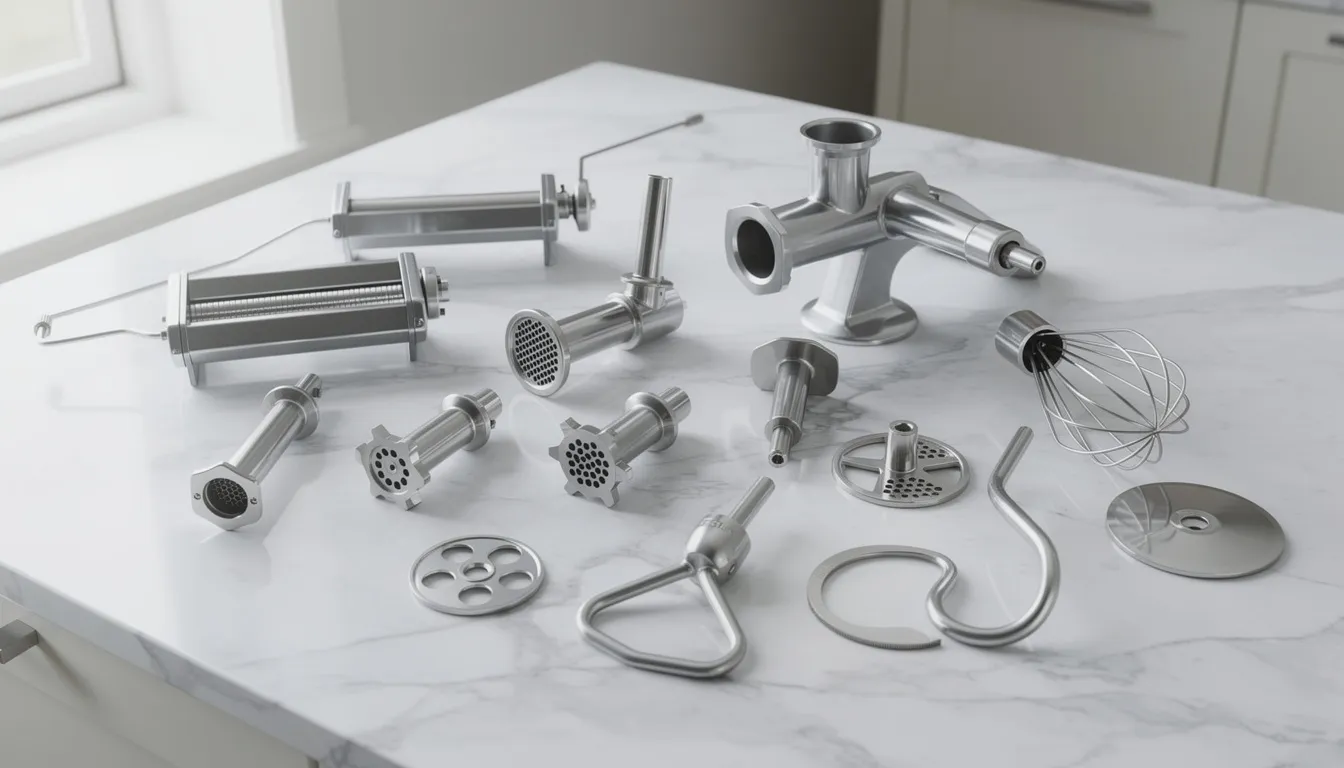
The basic package is already versatile, but optional various attachments transform this machine into an all-purpose kitchen workhorse.
Standard Package Contents
- 7L stainless steel bowl
- 3.5L plastic bowl with lid
- Dough roller
- Dough hook
- Scraper
- Double balloon whisks
- Single-wire beaters
- Cookie beaters
- Spatula
- Recipe book
Popular Optional Attachments
| Attachment | Use |
|---|---|
| Meat grinder | Fresh ground beef, sausage making |
| Pasta rollers and cutters | Homemade pasta, ravioli |
| Grain mill | Milling wheat, oats, specialty flours |
| Vegetable slicer | Rapid slicing, shredding |
| Citrus press | Fresh juice |
| Ice cream maker | Frozen desserts |
| Blender jug | Smoothies, soups |
These other attachments mount to the front drive, leveraging the motor’s power for non-baking tasks.
What Owners Commonly Make
- Rustic sourdough and focaccia
- Pizza dough for the week
- Bagels and burger buns
- Cinnamon rolls and challah
- Cakes and cookies
- Whipped meringues
- Fresh pasta
- Ground meat for burgers and sausages
America’s Test Kitchen highlighted its all-round performance across their 2023–2025 testing, praising both dough handling and whipping speed.
Comparing the Ankarsrum to KitchenAid and Other Mixers
Many shoppers are choosing between an Ankarsrum and a KitchenAid (or similar planetary stand mixer). Here’s how they actually differ.
The Core Mechanical Difference
| Feature | Ankarsrum | KitchenAid/Planetary |
|---|---|---|
| Bowl | Rotates | Stationary |
| Attachment | Mostly stationary | Spins in planetary motion |
| Motor location | In base | In head |
| Center of gravity | Low | Higher |
Power and Drive System
The Ankarsrum uses a belt drive from its base-mounted motor, delivering consistent torque without the efficiency losses that can affect gear-driven head motors. Many planetary mixers experience wear on gears and lubricant degradation over time. The Ankarsrum’s design avoids these issues.
The 32 lb weight and low motor placement mean less vibration and noise—even when kneading heavier doughs that would make lighter mixers walk across the counter.
Where Ankarsrum Excels
- Larger dough capacity – handles batches that would strain a 6-qt KitchenAid
- Less motor strain – heavy doughs don’t cause overheating
- Bowl access – completely open top for adding ingredients
- Ambidextrous design – works equally well for left and right-handed users
- Longevity – belt drive and metal construction built for decades
Where KitchenAid Might Win
- Familiar action – planetary mixing feels more intuitive to beginners
- Smaller batches – slightly better for single-batch cookies
- Attachment ecosystem – more accessory options in some markets
- Learning curve – easier to use straight out of the box
The Bottom Line
The Ankarsrum original stand mixer costs more upfront but is a stronger fit for frequent bakers. A mid-range planetary mixer often suits occasional bakers or those primarily making cakes and cookie dough. For serious bread bakers, the Ankarsrum is amazing—the spiral mixer action without commercial pricing.
Pros, Cons, and Who It’s Best For
Let’s cut to what matters if you’re deciding whether to buy.
Pros
- Outstanding bread dough performance—kneads dough like nothing else in its class
- Very large capacity (5 kg dough, ~6 loaves)
- Robust Swedish build, made in Sweden with 80+ years of heritage
- Long-term reliability—many machines last decades
- Versatile attachments for meat grinding, pasta, and more
- Quieter operation than many competitors
- Stable base that stays put during intense mixing
- Open bowl design makes it easy to monitor and add ingredients
Cons
- High upfront price ($700–$900+)
- Unusual mixing style with a learning curve
- More manual setup required (adjusting arm and roller position)
- Less common accessory availability in some markets
- Unique design may not suit all kitchen aesthetics
- Heavy and requires counter space or strong shelving
Ideal Users
- Serious home bakers making bread weekly or more
- Sourdough enthusiasts who bake multiple loaves per session
- Small cottage bakeries producing for farmers markets
- Families who cook and bake in large quantities
- Anyone frustrated with mixers that overheat or can’t handle stiff doughs
Who Might Not Need It
- Very occasional bakers (once a month or less)
- People with limited counter space
- Those who mostly make single cakes or light batters
- Bakers who prefer the familiar feel of planetary mixers
- Anyone on a tight budget
Care, Cleaning, and Longevity
Simple maintenance helps the Ankarsrum last for many years—often decades—in daily use.
Cleaning Basics
| Part | Cleaning Method |
|---|---|
| Steel bowl | Dishwasher safe |
| Plastic bowl | Dishwasher safe (top rack) |
| Roller, hook, scraper | Dishwasher safe or hand wash |
| Motor base | Wipe with damp cloth only |
After Dough Sessions
- Remove roller, scraper, and hook immediately
- Soak if dough has dried
- Avoid abrasive pads on the plastic bowl
- Wipe the bowl rim and base drive area
- Dry all parts thoroughly before storage
Routine Checks
- Ensure the arm moves smoothly
- Clear flour buildup from the drive socket
- Inspect power cord for damage
- Check that the lid fits securely
Ankarsrum offers spare parts and service support. Many machines from the 1950s and 1960s are still working today—the expected lifespan is measured in decades, not years. The year warranty varies by market, but the build quality speaks for itself.
FAQ
Q1: Can I use standard bread recipes in the Ankarsrum without changes?
Yes, but expect to make small adjustments. Many bakers find better results by reducing hydration by 5–10% and shortening kneading times. The Ankarsrum assistent builds gluten so efficiently that recipes designed for hand kneading or planetary mixers can produce overly wet dough. Start with familiar recipes, watch the dough texture, and use the windowpane test to judge development.
Q2: Is the Ankarsrum mixer good for small batches, like a single loaf or half-batch of cookies?
It can handle small batches—especially in the plastic bowl with whisks or cookie beaters—but its real strength is medium to large quantities. For dough, aim for at least 500g of flour for optimal kneading performance. Smaller amounts may not engage the roller effectively. For whipping, the machine handles as little as 1–2 egg whites successfully.
Q3: Does the Ankarsrum overheat with very stiff doughs like bagels or pretzels?
The powerful motor is designed for heavy loads and includes overload protection. Most users mix dense doughs without any overheating issues. However, the dough itself can warm up during extended kneading. If you’re working with temperature-sensitive recipes, use cold water, monitor dough temperature, and consider short rest intervals between mixing sessions.
Q4: Are older Ankarsrum accessories compatible with newer models?
Many attachments are cross-compatible across decades—the Electrolux Assistent, Magic Mill DLX, and Verona Assistent accessories often fit the current Ankarsrum assistent original. However, always check model numbers and current Ankarsrum compatibility charts before buying second-hand. Some older parts may have slight dimensional differences.
Q5: How noisy is the Ankarsrum compared to a typical stand mixer?
It produces mechanical noise—you’ll definitely hear it working—but the sound is often described as lower-pitched and less shrill than head-driven planetary mixers at high speed. The heavy base eliminates rattling and countertop walking, which contributes to a more pleasant overall sound profile. It won’t disturb sleeping family members in the next room, but it’s not silent either.